
The Flintstones, a place where stone-age families live in suburban comfort, drive foot-powered cars, and have dinosaurs for pets. Among all the colorful Flintstone characters that inhabit this world, one stands out for her fiery red hair, her pearl necklace, and her unbreakable spirit – Wilma Flintstone. As the matriarch of the Flintstone family, Wilma is a character who is fondly remembered for her wit, charm, and resilience. She is the quintessential stone-age woman, juggling her roles as a wife, mother, and friend with grace and humor. Not to mention putting up with Fred, her husband, who is a handful, to say the least. Let’s take a deep look at the character Wilma Flintstone in this cartoon character spotlight.
Creation of Wilma Flintstone
Wilma Flintstone is the brainchild of William Hanna and Joseph Barbera, the creative duo behind Hanna-Barbera Productions. Drawing inspiration from the sitcoms of their era, they envisioned a stone-age family that mirrored the dynamics of a modern American household. Wilma was designed to reflect the typical 1960s housewife and was created to serve as a counterbalance to her husband Fred’s boisterous and often over-the-top personality.
Her character was designed to be grounded, sensible, and often the voice of reason amidst the chaos that frequently surrounded the Flintstone household. She was the calm in the storm, the soothing voice that brought balance and stability. Her character was a testament to the strength and resilience of women in that era, even in the face of prehistoric challenges.
Wilma Flintstone was the first woman on television to be shown in bed alongside her husband. This was a groundbreaking move for a cartoon in the early 1960s, challenging the norms of the era and setting a precedent for future shows.
Wilma’s Signature Style

Wilma Flintstone’s style is as iconic as her character. Wilma’s look is simple and instantly recognizable. She has fiery red hair almost always worn into a bun and wears red lipstick to match. Her absolute signature clothing look was a white one-shoulder dress paired with a chunky pearl necklace. Depending on the occasion she would sometimes add accessories to her look like big hoop earnings or a bone in her hair.
Her style is a reflection of her character – simple, practical, yet undeniably elegant. Despite living in the stone age, Wilma’s fashion sense has a timeless appeal. Her one-shoulder dress, made from a single piece of fabric, is a popular Halloween costume to this day so much so that it inspired us to put together a Flintstones Costume Guide for fans to try and replicate her timeless prehistoric style.
Wilma’s iconic hairstyle was inspired by the popular beehive hairdo of the 1960s. The creators wanted to give Wilma a look that was both fashionable and easy to animate!
Voices Behind Wilma Flintstone
Wilma Flintstone’s character has been brought to life by two main talented voice actors over the years. The original voice of Wilma was provided by Jean Vander Pyl, who voiced the character from 1960 to 1996. She sadly passed away in 1999 due to cancer. She had a long successful voice actor career but her most famous character ever portrayed is undoubtedly Wilma. Vander Pyl’s portrayal of Wilma was warm and motherly, with a hint of sass that perfectly captured Wilma’s spirit. Jean also voiced Pebbles, Wilma’s daughter from the series.
After Vander Pyl’s passing, Tress MacNeille took over the role, lending her own unique touch to Wilma’s character. MacNeille’s Wilma was more lively and energetic, reflecting the evolution of the character over the years. She was the final voice of Wilma and is still an active voice actor. She also voiced another successful character, Daisy Duck, from the Disney family.
Fred and Wilma: A Stone Age Love Story
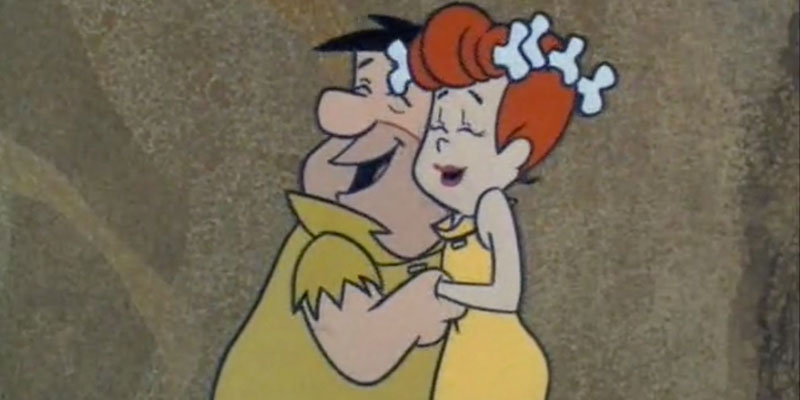
Fred and Wilma Flintstone are the quintessential example of the adage “opposites attract.” Their relationship, filled with love, laughter, and let’s face it many disagreements, is a reflection of real-life marriages, and it’s their contrasting personalities that make their dynamic so compelling.
Fred, with his boisterous personality and larger-than-life antics, often finds himself in situations that require Wilma’s calm and pragmatic approach to resolve. Wilma, on the other hand, is the voice of reason in the Flintstone household. Her patience and understanding balance Fred’s impulsiveness and stubbornness. This balance creates a harmonious dynamic that has captivated audiences for decades.
The creators of The Flintstones, William Hanna and Joseph Barbera, wanted to portray a relationship that was both relatable and entertaining. They drew inspiration from the classic sitcom dynamic of a loveable, bumbling husband and a sensible, patient wife. This type of dynamic while very dated today was a common theme in sitcoms of the 1960s, and Hanna-Barbera cleverly adapted it for the stone-age setting of The Flintstones.
Wilma Flintstone was the first animated character to appear on the cover of TV Guide in 1961. This was a testament to her popularity and the impact of The Flintstones on popular culture!
Wilma and Betty: A Friendship Set In Stone

Wilma Flintstone and Betty Rubble are the epitome of a perfect duo friendship. Their bond, a central theme in The Flintstones, is a testament to the power of female camaraderie and mutual support. They are more than just neighbors; they are best friends, and their friendship is a shining example of the kind of relationship many of us aspire to have in our own lives.
Both Wilma and Betty often find themselves bonding over the antics of their respective husbands. Whether it’s Fred’s latest harebrained scheme or Barney’s well-meaning but often misguided actions, Wilma and Betty are always there to lend each other a sympathetic ear and a helping hand. Their shared experiences as wives and mothers in the town of Bedrock serve as the foundation of their strong bond.
Wilma and Betty are the essence of true best friends. They are there for each other in times of joy and sorrow, laughter and tears, triumphs and trials. Their friendship is a reflection of the special bond that exists between best friends, a bond that is built on mutual respect, shared experiences, and unconditional love.
Moreover, Wilma and Betty are representations of strong female leads. Despite living in a male-dominated stone-age society, they are nev